Greenhouse gas (GHG) emissions & air quality
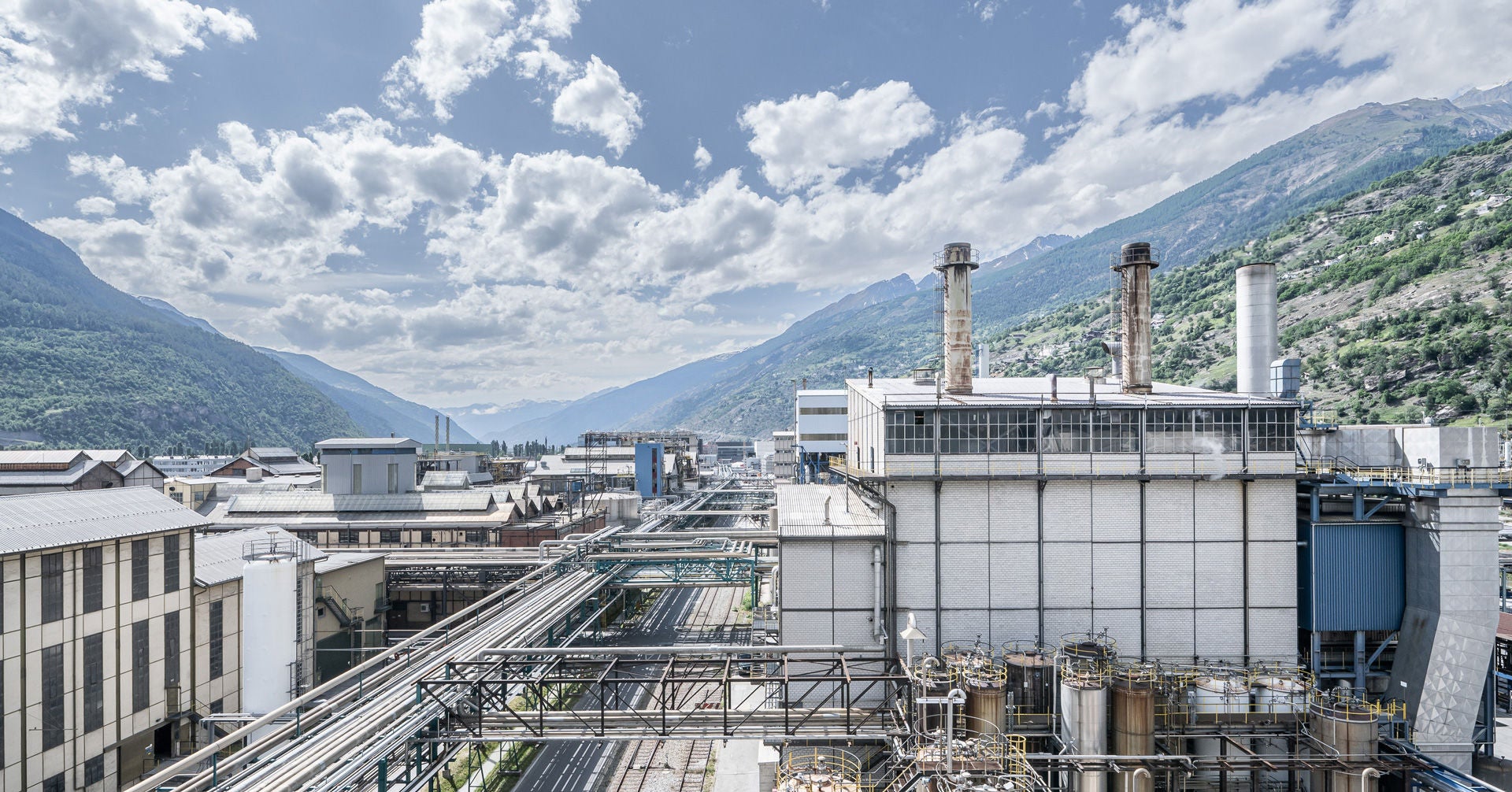
Reducing GHG emissions and other air pollutants is a key priority for Arxada in our effort to preserve our planet and limit climate change. While our products can have a positive impact, we look to decarbonize our facilities and across our supply chain. This aligns with our ambition to be a low-carbon chemicals company with a net zero carbon footprint.
In 2023, SBTi approved our emission reduction targets in line with a 1.5°C emissions reduction trajectory. This recognition solidifies Arxada's steadfast commitment to sustainability and its contribution to our industry's transition to cleaner, greener solutions. Our targets are:
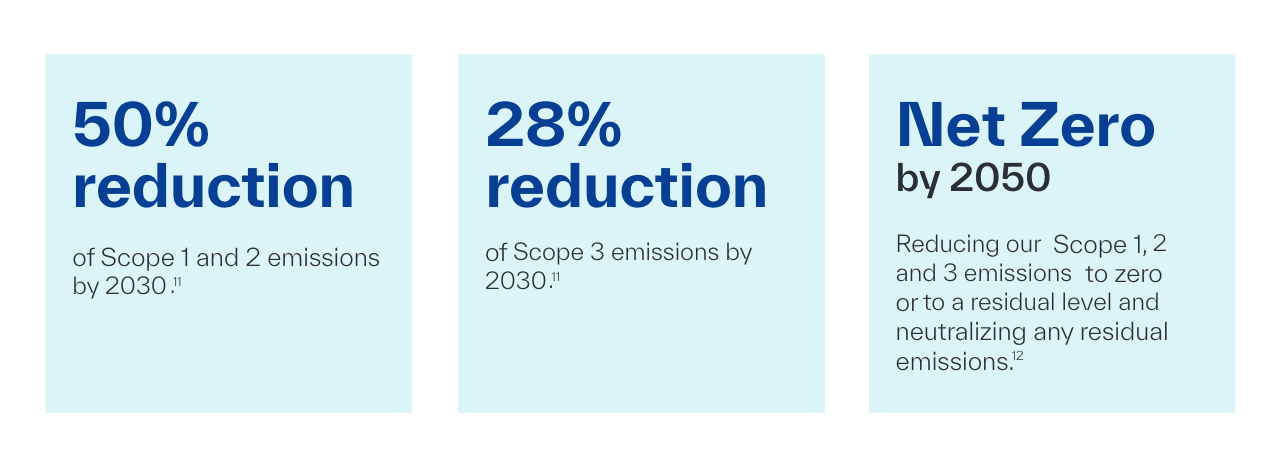
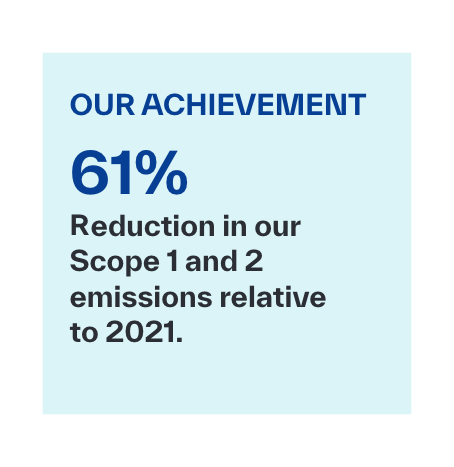
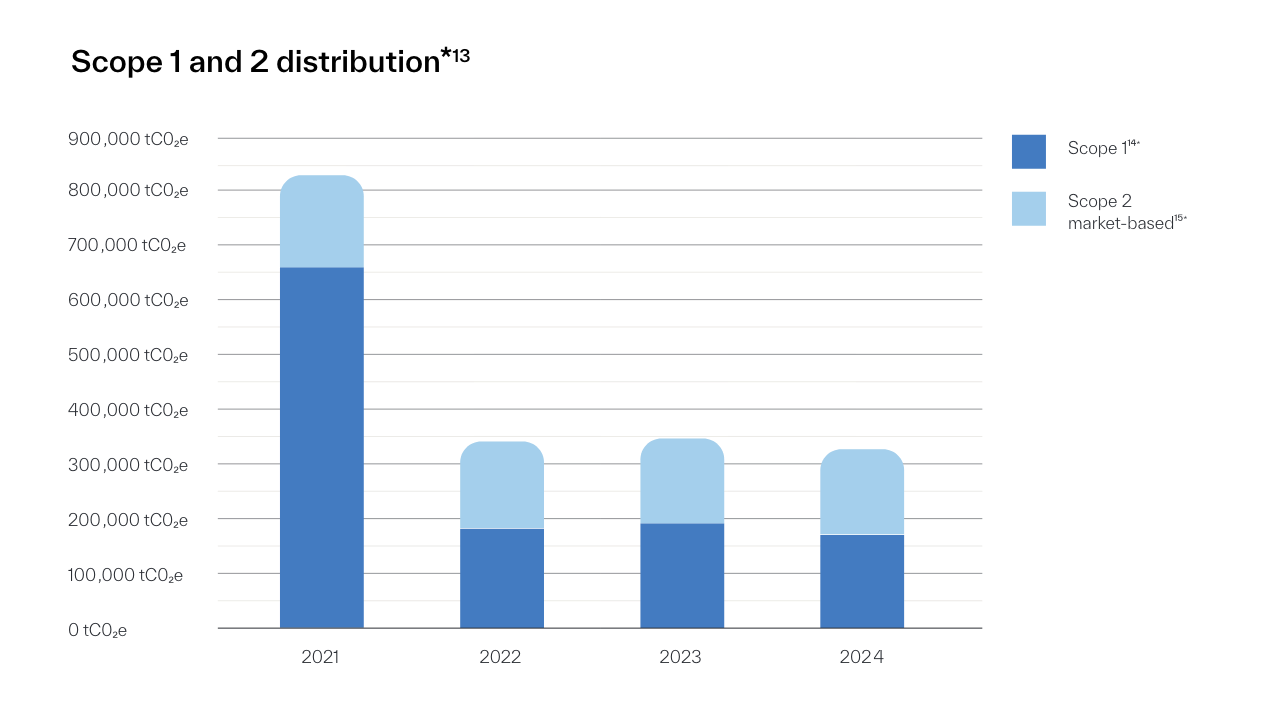
Arxada's operational team is responsible for delivering our strategy. As of 2024, we have already met our 2030 commitment, achieving a 61% reduction in our Scope 1 and 2 emissions relative to 2021. To meet net zero by 2050, we will be working to reduce our emissions in line with our approved SBTi targets.
In May 2026, Arxada was awarded the Gold EcoVadis Medal, based on our 2025 actions and performance, scoring in the top 5% of companies rated on the platform. In addition, it retained its designation as a Carbon Management Leader, defined by EcoVadis as a company with a strong GHG management system and best-in-class decarbonization commitments, actions and reporting capabilities.
In December 2025, Arxada achieved a ‘B’ rating for Climate Change from CDP, the global leader in environmental disclosure. This recognition underscores our commitment to transparency, accountability, and continuous progress in sustainability.
Our Scope 1 and 2 emissions
Arxada’s 2025 GHG inventory includes Scope 1 emissions from its manufacturing processes and facilities and Scope 2 emissions from purchased electricity and steam.
We seek opportunities for decarbonization across our facilities globally. One major project was the installation of a catalytic converter in 2021 in Visp, our largest production site. This installation led to significant reductions in nitrous oxide (N₂O), which accounted for a large portion of our Scope 1 emissions (2021 baseline). To date, the converter has enabled us to reduce our N₂O emissions from Visp by over 500,000 tCO₂ per year, achieving a reduction of over 72% in global Scope 1 emissions compared to 2021. The catalytic converter was a key driver in our ability to meet our Scope 1 and 2 target set in 2022, which in turn allowed us to achieve a 59% reduction of our global Scope 1 and 2 emissions from our 2021 baseline. However, this achievement does not deter us from further seeking to improve the efficiency of our operations and finding opportunities to reduce our footprint. Another priority is reducing our Scope
2 emissions from purchased steam and electricity used to run our daily operations. We continue to explore ways to increase our use of renewable energy and other low-carbon energy sources. We are also working to identify equipment replacements that are more energy efficient.
Supporting customer Scope 3 reduction through Arxada’s integrated Verbund network
Arxada’s Visp site operates on a highly efficient “Verbund” principle, integrating material and energy flows through interconnected plants and recycling processes. The fully back-integrated chemical network spans from basic feedstocks such as LPG, naphtha, and acetic acid to key intermediates including acetylene, ethylene, hydrogen, ammonia, ketene, and acetic anhydride. By switching from fossil-based to bio-based feedstocks, the network’s direct CO₂ emissions become largely biogenic while also increasing the biogenic carbon content of downstream products. In parallel, the use of emission-free Swiss-certified electricity and green natural gas (biomethane) can reduce Scope 1 and 2 emissions to residual levels. To further support customer Scope 3 reduction goals, Arxada’s Procurement team
works closely with reliable suppliers to source lower-footprint raw materials, while ongoing investigations explore the use of renewable biofuels in the site’s acetylene generation unit.
These innovations will further enable Visp to produce low-carbon, cost-competitive chemical products and advance toward our net zero goal by 2050 commitment while better supporting our customers’ sustainability efforts.
Our Scope 3 emissions
In 2025, our Scope 3 emissions accounted for approximately 85% of our total GHG inventory.
To strengthen the consistency and comparability of our emissions reporting, we recalculated our Scope 3 emissions for FY2021 through FY2024. We worked with an external consultant to align the calculation methodology across all reporting years. We also improved the underlying activity data and updated emission factors and calculation models. The harmonized methodology was then implemented in our new sustainability reporting system. This provides a consistent basis for tracking progress against our emissions reduction targets.
Following the validation of our SBTi targets in 2023, we established a Scope 3 emissions reduction target. We committed to reducing our absolute Scope 3 GHG emissions by 28% by 2030, relative to 2021. Following the recalculation of our historical Scope 3 emissions, we plan to update our Scope 3 inventory and review our existing reduction target. We will engage with SBTi to assess and review our targets in light of the restated emissions.
To support this target, we are identifying the raw materials with the greatest contribution to our GHG intensity. We are exploring opportunities to reduce their consumption and assess the feasibility of recovering, recycling and reusing raw materials. We are also planning to develop a climate transition plan. This will help us assess, quantify and implement carbon reduction measures related to purchased raw materials and reduce associated emissions.
In parallel, we are working to reduce our Scope 3 footprint through responsible sourcing and improved waste management. We also plan to engage strategically with suppliers and customers to identify further emissions reduction opportunities. Please see our Responsible Sourcing section for further details on how we evaluate and engage with our suppliers.
| 2021 | 2023 (restated)¹⁷ | 2024 | 2025 | |
|---|---|---|---|---|
| Original Scope 3⁴ (restated FY22 & FY23)⁵ | 1,725,106 tCO₂e | 1,915,755 tCO₂e | 1,461,848 tCO₂e | - |
| Improved Scope 3⁴ (restated FY21 - FY24)⁵ | 2,404,954 tCO₂e | 1,863,389 tCO₂e | 1,888,256 tCO₂e | 1,976,086 tCO₂e |
Our emissions to air
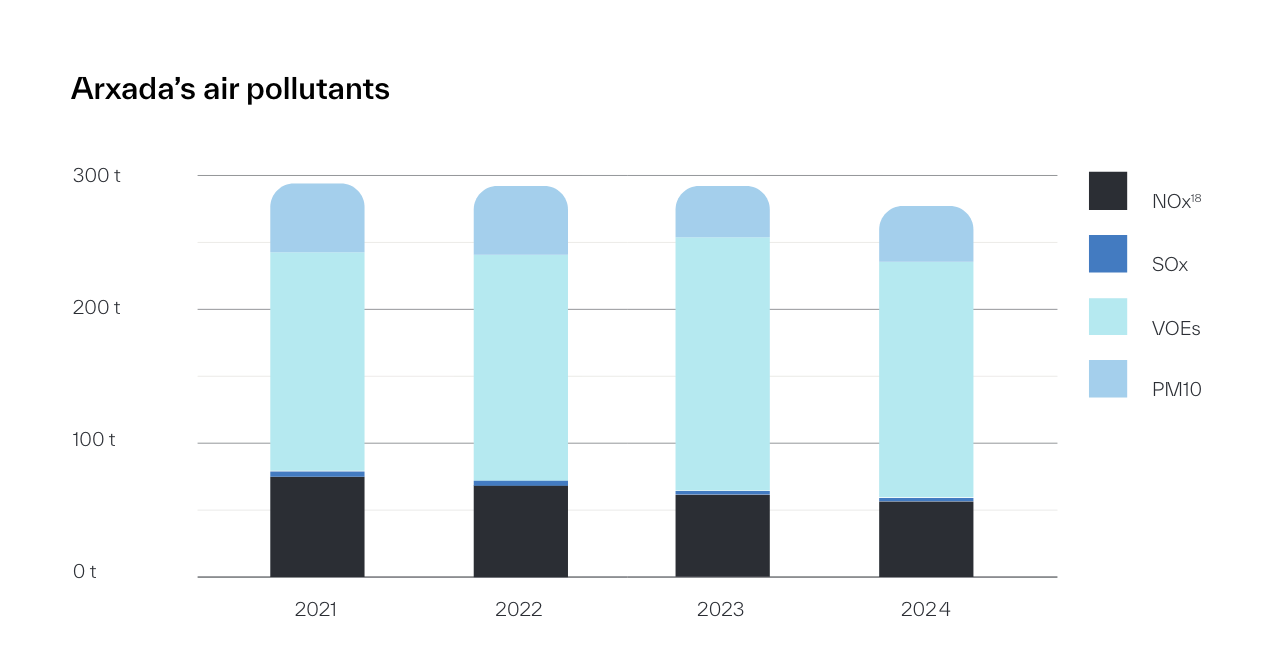
In addition to GHG-related gases, we regularly monitor our emissions to air for concentrations of sulfur oxides (SOx), nitrogen oxides (NOx) and volatile organic compounds (VOCs) to mitigate emissions of dust and particulate matter.
We monitor these air pollutants in accordance with the timelines and procedures established by the relevant regulatory authorities. We employ various technologies, such as, filters and capture systems, to minimize emissions into the atmosphere. In 2025, no violations of air emission regulations were recorded at our production plants.
Looking forward to 2026
In 2026, we will continue to advance our decarbonization strategy by identifying and implementing energy efficiency projects, increasing the use of lower-carbon and renewable energy sources where feasible, and optimizing manufacturing processes across our global operations. We will also strengthen collaboration with suppliers to address Scope 3 emissions, enhance emissions data quality and transparency, and further integrate climate considerations into operational decision-making as we progress toward our science-based targets and net zero by 2050.

Driving down emissions with innovation: Steam reduction in Visp
Steam consumption at Arxada’s Visp plant is a major contributor to Scope 2 emissions. After extensive site-wide screening, a key reduction
opportunity was identified in the 5-Ethyl-2-methylpyridine (MEP) process. This process generates significant wastewater that must be treated via energy-intensive distillation using steam and cooling water. Alternative treatment options were assessed but not viable.
In 2025, Arxada implemented a vapor recompression system on the distillation column. By recovering and reusing heat from overhead vapor—similar to a heat pump—the system reduces the need for fresh steam. It operates with only a small additional electricity demand (around 46 kW for compressors and pumps). This innovation is expected to cut emissions by approximately 2,400 tCO₂e annually, equivalent to the emissions of about 1,200 mid-sized cars—demonstrating how technical innovation, economic viability, and sustainability can align.
[11]Based on our 2021 baseline.
[12] Our definition of net zero is aligned to the SBTi definition: Reducing Scope 1, 2 and 3 emissions to zero or to a residual level that is consistent with reaching net-zero emissions at the global or sector level in eligible 1.5°C-aligned pathways and neutralizing any residual emissions at the net-zero target year and any GHG emissions released into the atmosphere thereafter.
[13] The scope of our Scope 1 and 2 data, includes all manufacturing sites with FTE >10 (note, Auckland New Zealand and Trentham Australia manufacturing sites are included even though they have less than 10 FTEs) and Pilot Manufacturing sites with FTE >45. Emissions from offices are not included, as these are not material to Arxada’s overall emissions.
[14] Our Scope 1 emissions include the direct emissions to air from our operations, including CO2, N2O, CH4, from fuels (e.g., LPG and Fuel Oil). Arxada does not have emissions from PCF, HFCs or SF6.
[15] Our Scope 2 emissions are composed of purchased electricity and steam. For European locations, instead of the applicable residual mix factors, location-based IEA factors have been used.
[16] Our Scope 3 data includes Arxada (legacy LSI), Troy and Enviro Tech. The Scope 3 emissions calculations exclude the following categories: Upstream leased assets (Cat. 8), Processing of sold products (Cat. 10), Use of sold products (Cat. 11) , End-of-life treatments of sold products (Cat. 12), Downstream leased assets (Cat.13), Franchises (Cat.14), Investments (Cat.15). As an improvement of our Scope 3 approach, our 2022 and 2023 data also include Processing of sold products (Cat.10) and End-of-life treatments of sold products (Cat. 12). For our Waste generated in operations (Cat. 5) data, the footnote 11 scope limitations apply.
[17] The 2022 and 2023 Scope 3 values have been restated to account for missed data from Troy and Enviro Tech. These restated values supersede those published in our 2023 Sustainability Report. We acknowledge that additional methodological improvements were made for the 2024 calculation. We aim to publish a full recalculation for years 2021-2023 using our improved methodology in our 2025 Sustainability Report.
[18] NOx emissions do not include N₂O, which is included in our Scope 1.
* Metrics have been assured by ERM CVS. For more information, please see the “External Assurance Statement” which details the scope, activities and conclusion of their engagement.